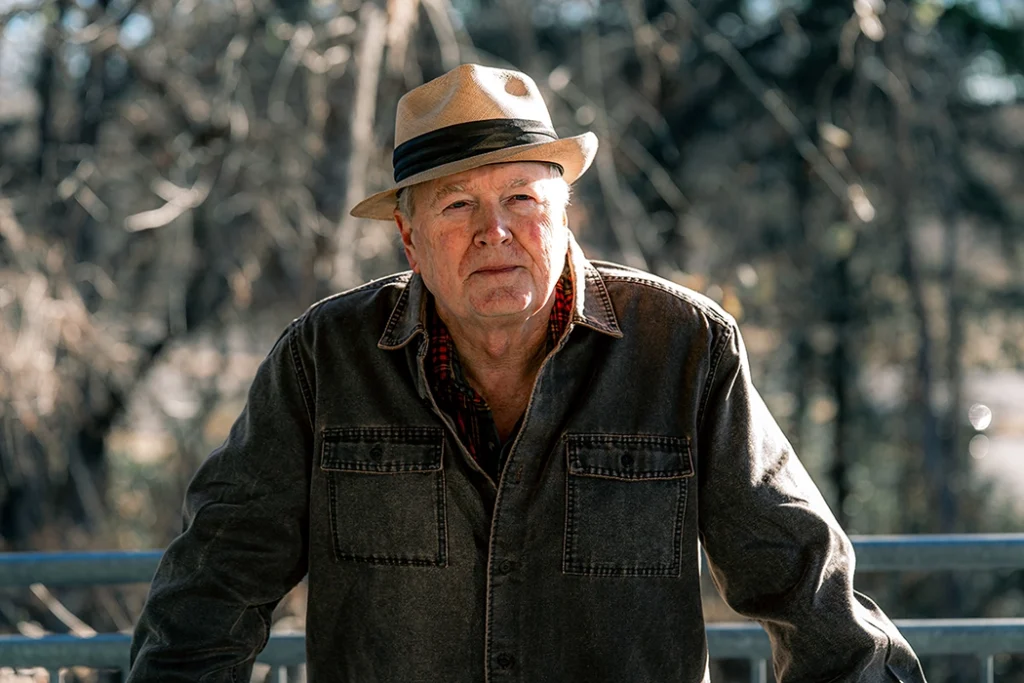
Alan Burton with a hat facing the camera in front of a wooded area. About the author photo

Alan Burton

Sports writer. Public relations director. Texas author.
My Story

Alan Burton on a bridgeI was a recovering sportswriter who became a public relations director. Now, I’m a recovering P.R. director-turned-author. Along the way, I’ve managed to elude fame and fortune, but that’s OK.

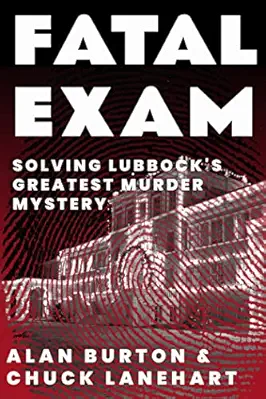
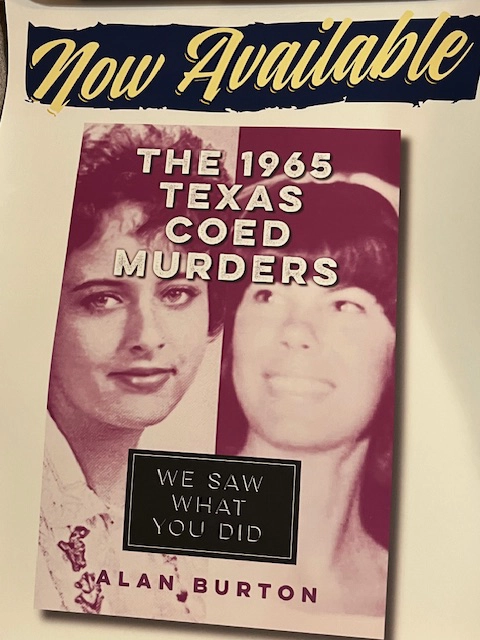
To date, I’ve written ten books, including my newest, which is due for release this spring. Topics have ranged from Texas sports and music quotes to Texas celebrities to Mike Leach quotes to, most recently, true crime. The new book, “The 1965 Texas Coed Murders – We Saw What You Did,’’ will be available in May 2026 and published by The History Press. This is my second venture into the world of true crime, having co-authored “Fatal Exam: Solving Lubbock’s Greatest Murder Mystery,’’ with Chuck Lanehart in 2023.

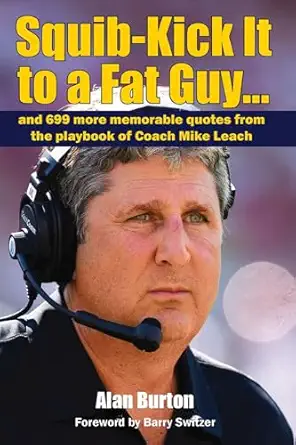
My 2016 book, “Squib Kick It to A Fat Guy and 699 more memorable quotes from the Playbook of Coach Mike Leach’’ – was a top-seller in two Amazon categories. Many of my other books were “critically acclaimed,’’ which is the spin doctor’s way of saying they didn’t sell all that well.

Throughout a professional writing career that spans some forty years, I’ve never been a big believer in awards, mainly because I’ve never received many. But my work has been recognized by the Associated Press, Texas School Public Relations Association and Oklahoma College of Public Relations Association.

Alan BurtonI retired as the special assistant to the president and director of university communications at Southeastern Oklahoma State University in 2023. After learning a great deal (accuracy, deadlines, and the inability to earn a living) as a sportswriter, I entered the real world and embarked on a career in public relations in common education (K-12) and higher education. I was born and raised in Sherman, Texas, which is 60 miles north of Dallas. Note that I’m a proud product of Texas Public Schools, although I’m probably prouder of them than they are of me.

Somehow, I did graduate from Texas Tech University. In my (and others) defense, the late 1970s were a challenging time to be a college student, especially at (Disco) Tech in Lubbock. In a sign of the times, late night forays into the local discotheques impacted class attendance the following morning, and not in a good way.

Today, among my hobbies and interests are reading, writing, but no arithmetic. This includes reading the daily newspaper (print version) on the back porch with a cup of coffee, maintaining a vast library of eclectic books, watching Friday night high school football and Saturday afternoon college football, and, in a nod to my disco past, attending Boz Scaggs concerts (twenty-one, as of this writing).

Ask the Author

Q&A

How do you decide on what you’re going to write a book about?

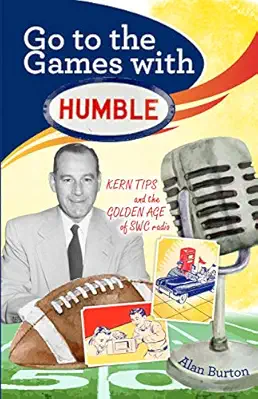
For me, it has to be a subject that is interesting, not only to me, but to potential readers. It needs to be a topic I have some knowledge about as well. And it helps if it’s unique – as in, no other book has been written on the subject. I consider seven of my ten books to be unique – ‘Fatal Exam,’ the Mike Leach quote books, ‘Go to the Games with Humble,’ and ‘Texas High School Hotshots’ are good examples. Once I’ve decided on my subject, I tend to develop a real passion/obsession and dive into the research. And I have an ongoing list of 10-12 potential book topics that I might consider working on at some point.

Do you prefer working with a traditional book publisher or self-publishing?

I’ve done both, and there are pros and cons for each. Securing a book publisher who is interested in your book is no sure thing. On the plus side, a traditional publisher pays for all costs associated with publishing the book, and takes care of such details as registering the copyright, hiring editors and cover designers, and marketing. In other words, the author is freed up to write the book and not be distracted by other tasks. On the down side, because the publisher is doing all that, it has the authority to make decisions on the title and cover design, with perhaps some input from the author. So, in the end, the author doesn’t have much control.

In self-publishing, on the plus side, the author has almost total decision-making authority on the book, including title, cover, photos used, etc. On the down side, the author has to do a lot more work (including marketing) and/or hire an editor-company for certain tasks in order to get the book published.

Financially, with a traditional publisher, there is no monetary risk to the author, as the company is paying all publication costs. So, the author then receives a royalty check based on sales each year. In self-publishing, there is some financial risk, as the author is putting money up front to pay for costs associated with the book being published. So, the author must recoup those costs through sales to break even and hopefully make a profit at some point.

With that being said, financially and sales-wise, my most successful book was self-published, as was my least successful.’

Who chooses the book title, why is a particular title selected, and when is the decision made?’’

I’ve actually selected the title for five of my ten books, including ‘Go to the Games with Humble,’ and ‘Texas High School Hotshots.’ I had great difficulty picking a title for the Mike Leach quote books and ‘Fatal Exam.’ ‘Squib-Kick it To a Fat Guy’ was one of the suggestions of my editor, while ‘Fatal Exam’ was proposed by my publisher. Either way, you want a title that is catchy and marketable, while ideally accurately describing what the book is about. And I try to have at least a working title as I’m writing a book.

What is the most enjoyable part of writing a book for you? Least enjoyable?

When it’s finished! Seriously, I really enjoy doing the research on the topic in which I’m writing. This includes a variety of resources – internet, web sites, newspapers, magazines, books, interviews, travel, etc. Invariably, I stumble across something that is more interesting than what I was originally looking for. The least enjoyable part for me is the editing the manuscript. It’s a tedious, nitty-gritty process, and by that point, I’m just anxious to get finished.

How long does it take you to write a book?

It varies according to a number of factors, but on average, about a year from start to publication. I wrote ‘Go to the Games’ in about six months during the pandemic. On the other hand, ‘Fatal Exam’ was a 20-year project. All of my books have required extensive research, which can slow the process somewhat. When I’m really into the writing itself, it can become rather intense. I may write for eight hours every day for a couple of weeks, and then write nothing for a few days. It’s like anything else, you get on a roll and have some momentum going, and you don’t want to stop. I have a 10-step process I’ve developed in writing a book:

  1. Decide on a subject matter
  2. Research
  3. Begin writing
  4. Seek publisher
  5. Interviews with book subjects
  6. Research, including travel, if necessary
  7. Continue writing
  8. Editing-proofing
  9. Re-writes if necessary
  10. Submit to publisher for final edits/corrections
As an author, how do you promote and market your books?

Among other things, I’ll send out press releases and contact media about the book, post information on social media, send out books to reviewers, visit book clubs, speak at civic clubs and other events, utilize my website, and do a few book signings. But the most effective method I’ve found in selling books is ‘word of mouth’ among readers.

Of the books you’ve written, do you have a favorite?

The short answer is no, but my usual answer is my most recent book – in this case, ‘The 1965 Texas Coed Murders.’ I’m very proud of the Mike Leach quote books and ‘Go to the Games with Humble.’ The Leach books now serve as a tribute to the legacy of the late coach. And the Humble book recognizes a largely forgotten group of radio broadcasters that received great response from older readers.  ‘Texas High School Hotshots’ is also a favorite due to its unique nature.

Most of your books are about sports or Texana, with several being collections of quotes. How in the world did you go from writing ‘Squib-Kick it To a Fat Guy’ to ‘Fatal Exam?’

Great question. I had written so many ‘quote books’ that I was starting to be typecast as ‘that sports quote writer.’ Actually, I started researching what turned out to be the ‘Fatal Exam’ true crime book in 2004, before it was finally published in 2023. It was an off-and-on project that was delayed for various reasons. Finally, it was a challenge for me: could that sports guy actually write something else – like a true crime book?”

What got you interested in writing and eventually a career in that field?

A love of sports got me interested in reading, which got me interested in writing. I basically learned to read by looking at the sports section of the newspaper every day, beginning when I was six years old. When I was seven, my parents gave me a subscription to “Sports Illustrated’’ for my birthday. And for Christmas, they gifted me with the book, “Darrell Royal Talks Football,’’ which was way beyond my comprehension. But through reading the newspaper, I developed pretty good vocabulary and spelling skills. Later on, at Texas Tech, I earned an English degree, but didn’t want to teach. So, I worked as a sportswriter at my hometown newspaper, which, at that time, was the greatest training in the world for an aspiring writer. I wrote game stories and features, but my favorite was column writing, because you could use some creativity. You meet some interesting characters (co-workers) at a newspaper, and I learned a great deal about accuracy and deadlines. Those things served me well later when I began a career in public relations.

What are your favorite fiction books, and what writers have influenced your writing?

As an English major, I read many of the classics, but I don’t have the talent necessary for fiction writing. My two favorite all-time fiction works are probably “To Kill A Mockingbird,’’ and “The Last Picture Show.’’ If I had to pick a fiction favorite writer, it would be Larry McMurtry. I also enjoy the works of Steve Yarbrough, a contemporary novelist from Mississippi.

But if I had to select writers who influenced me, it would have to be a number of Texas sportswriters I read growing up. Most major daily newspapers – Dallas, Fort Worth, Houston, Austin, San Antonio – had talented writers. Guys like Dan Jenkins and Bud Shrake went on to write novels, and other sportswriters also wrote non-fiction books and magazine articles. As far as specific writers, some of the guys who influenced me were Blackie Sherrod, Bob St. John, John Anders, Carlton Stowers, Bob Galt, Gary Cartwright, Mike Shropshire, Sam Blair, and, last, but not least, Joe Bob Briggs , aka John Bloom. At one time or another, all worked for Dallas-Fort Worth newspapers. I especially admire Stowers, who, after a career in sports writing, evolved into a terrific true crime author. Other writers I thought highly of were Harold Ratliff  and Mike Cochran of the Associated Press, Jan Reid, Jimmy Banks, and Mickey Herskowitz. With few exceptions, most of these writers wrote not just sports, but on such topics as entertainment, politics, and true crime. They were not “one-trick ponies.’

What type of books do you read now?

A wide variety – from sports to true crime to music to biography to history to Texana to even a little romance! Three of the more eclectic books I have in my home library are on the history of electric football, the history of Frito chili pie, and the history of miniature golf.